If you're wondering how many skins are in Fortnite in 2026, the short answer is this: the game now has well over 2,500 outfits, and the full cosmetic pool — including back blings, pickaxes, gliders, wraps, and emotes — has pushed past 16,000 total items on major tracking databases like FNZone. That number has climbed fast from Fortnite’s early 2017 days, when the game launched with only a small batch of purchasable outfits and no Battle Pass at all. Nearly ten years of seasonal updates, collabs, and constant live-service drops have turned that tiny starting lineup into one of the biggest cosmetic libraries in gaming.
There is one important catch, though. Fortnite adds cosmetics so often that any fixed number starts aging almost immediately, sometimes within the same week. So while this guide gives the best current estimate, you should treat it as a live snapshot rather than a permanent final total.
How Many Skins Are in Fortnite Right Now
The best estimate puts the current Fortnite outfit count above 2,500 in mid-2026, with some community databases landing closer to 2,600 depending on how they sort certain variants. In this case, we’re talking specifically about outfits — the character skins you equip in your locker — not the entire cosmetic catalog.
That distinction matters more than people think. A lot of players use “skins” as shorthand for every cosmetic in the game, but that can make the total sound way higher than it really is. If you only count playable outfits, the number stays in the mid-2,000s; if you lump in emotes, tools, wraps, and everything else, it jumps dramatically.
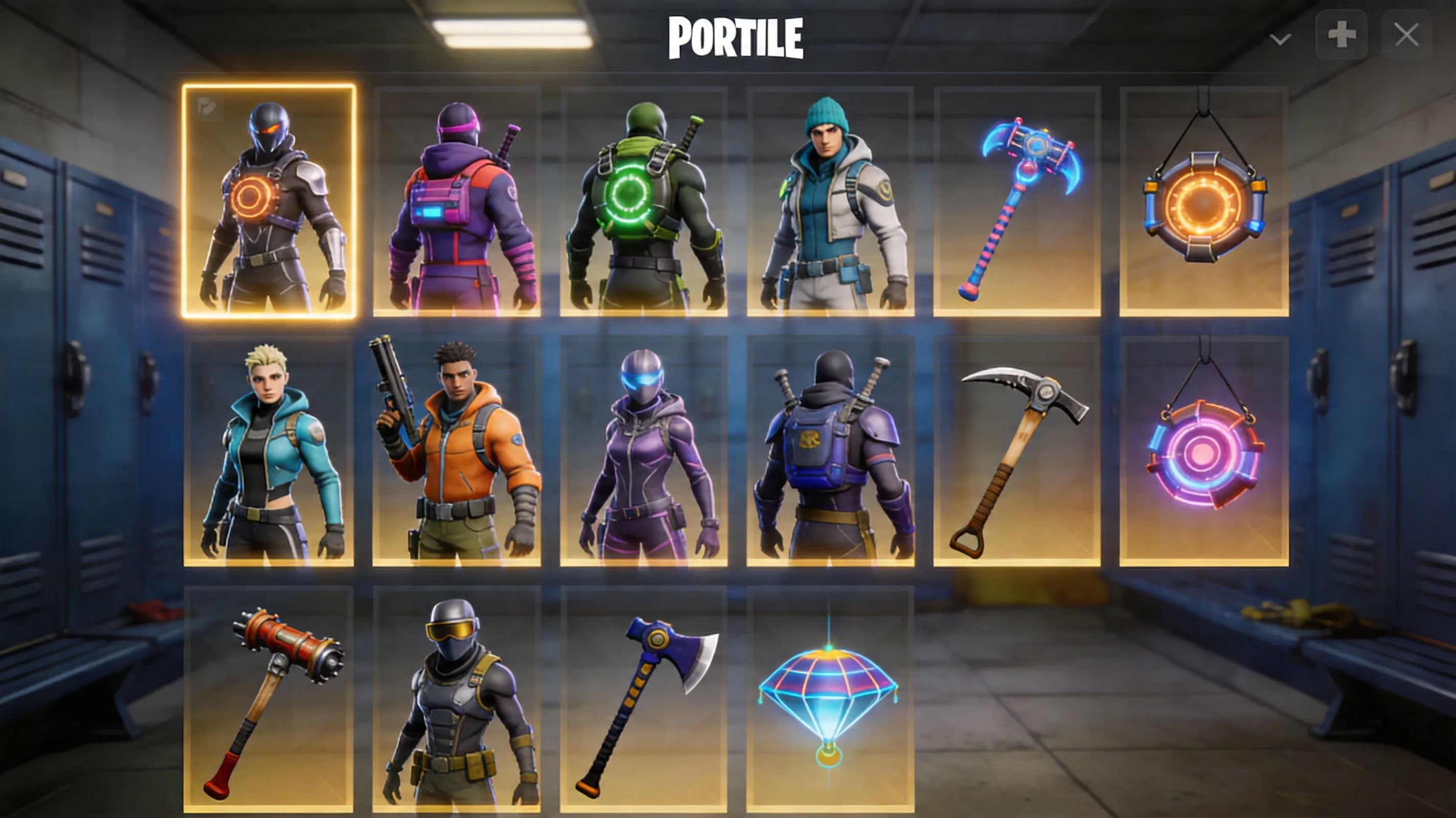
For the most accurate running count, community tools like Fortnite.gg and FNZone are still your best bet. They update quickly after patches and usually separate outfits from other cosmetic types, which makes them much more useful when you’re checking how many skins are in Fortnite at any given moment. Epic itself does not publish an official all-time total, so third-party trackers are basically the standard source here.
And yes, the number can move pretty quickly. A major Battle Pass, a collab-heavy patch, or even a busy Item Shop stretch can add 30 to 80 outfits in a single month when Epic is really pushing content.
Fortnite Skin Count Breakdown
To make sense of the total, it helps to split Fortnite skins by how they’re released. Not every category follows the same rules, and some are much more exclusive than others.
| Category | Estimated Count (2026) | Notes |
|---|---|---|
| Original Fortnite skins | ~1,200+ | Epic-made characters with no outside IP |
| Collaboration skins | 400+ | Licensed crossover outfits from major franchises |
| Fortnite Crew skins | 65+ | Roughly one exclusive set per month since December 2020 |
| Battle Pass / OG Pass skins | 300+ | Seasonal unlocks tied to progression |
| Free & promotional skins | ~100+ | Quests, account linking, platform promos, EGS offers |
Original Fortnite designs still make up the biggest share of the game’s wardrobe. That includes major fan favorites like Midas, Peely, and Drift, along with newer Chapter 7 originals such as Carina and Kingston. Even with Fortnite leaning hard into crossovers, original skins still outnumber collabs. Content creator Littlest Snail Gaming pointed out in early 2026 that collaborations still account for less than half of all Fortnite outfits, even if some recent seasons make it feel like the opposite.
The Fortnite Crew lineup has also become a pretty sizable category on its own. Since launching in December 2020 at $11.99 per month, Crew has added one exclusive outfit set every month. That means the catalog now sits at 65+ skins, including names like Galaxia, Loki Laufeyson, Wolverine Zero, and newer 2026 additions like Gale. The key thing here is exclusivity: these outfits do not rotate through the Item Shop and are not tied to Battle Pass alternatives.
Free skins are still a smaller slice, but they’ve grown a lot compared to earlier years. By Chapter 7 Season 1, around nine outfits were available without spending V-Bucks through methods like LEGO account linking, Epic Games Store purchase promos, platform perks, and ranked quests. Examples include Explorer Emilie, Mr. Dappermint, Grace Ashcroft through Resident Evil Requiem, Kliff via Crimson Desert, Shinji through PS Plus, and Felinos from ranked quest rewards. Epic’s 2026 EGS cross-purchase push — reportedly covering 40+ gaming collabs — has made this category way more active than it used to be.
Fortnite Skin Categories and Counting Rules
A lot of confusion around Fortnite skin totals comes down to one thing: people are not always counting the same way. The cleanest method is to count outfits as the actual locker entries and treat styles as alternate looks attached to that same outfit. Once you do that, the total becomes much easier to track without inflating it.
Item Shop outfits are the most common release type and rotate daily, sometimes returning often and sometimes disappearing for months or even years. Battle Pass skins work differently, since they’re unlocked through seasonal XP progression. The newer OG Pass, tied to Fortnite’s ongoing OG mode, follows a similar structure and costs 1,000 V-Bucks. For example, the Chapter 1 Season 8 OG Pass included three full outfits — Synthesis, Pyreheart, and Luxe Patroller — plus 45 total cosmetic rewards spread across six pages.
Starter Packs are another separate lane. These usually bundle one outfit with V-Bucks at a discounted price, often around $5, and some of them have become surprisingly rare over time. The original Rogue Agent Starter Pack from 2018 is still the classic example players bring up.
Counting Edge Cases
This is where the count gets messy. Some cosmetic types look close enough to skins that people try to include them, but most community databases still leave them out of the main outfit total.
A few common rules usually apply:
-
LEGO Fortnite and Festival-only cosmetics are generally excluded if they do not exist as standard Battle Royale outfits.
-
Reskins and remix skins are counted as separate outfits if they have their own unique locker entry, even when they reuse an older model.
-
NPC-only character models are not counted, since players cannot equip them.
That second point gets debated a lot. Some players feel remixes are too close to the original to deserve a separate count, but if Epic gives them a distinct locker slot, most trackers count them as their own skin. Styles are different — they stay attached to one outfit and do not increase the total.
How Many Collab Skins Are in Fortnite
The crossover side of Fortnite is easily the most talked-about part of its cosmetic catalog, and honestly, the scale is pretty wild. As of April 2026, Fortnite has added more than 400 collab skins from 100+ franchises, based on large community tracking efforts like alviran.net. Epic has also confirmed that 40+ new crossovers are planned for 2026 alone.
Several of those are already live or officially announced, including Resident Evil Requiem, Crimson Desert, Looney Tunes, South Park, and Phineas and Ferb. On top of that, leaks have pointed to names like Crash Bandicoot, Lucy from Fallout, and Marvel Rivals characters as possible upcoming additions.
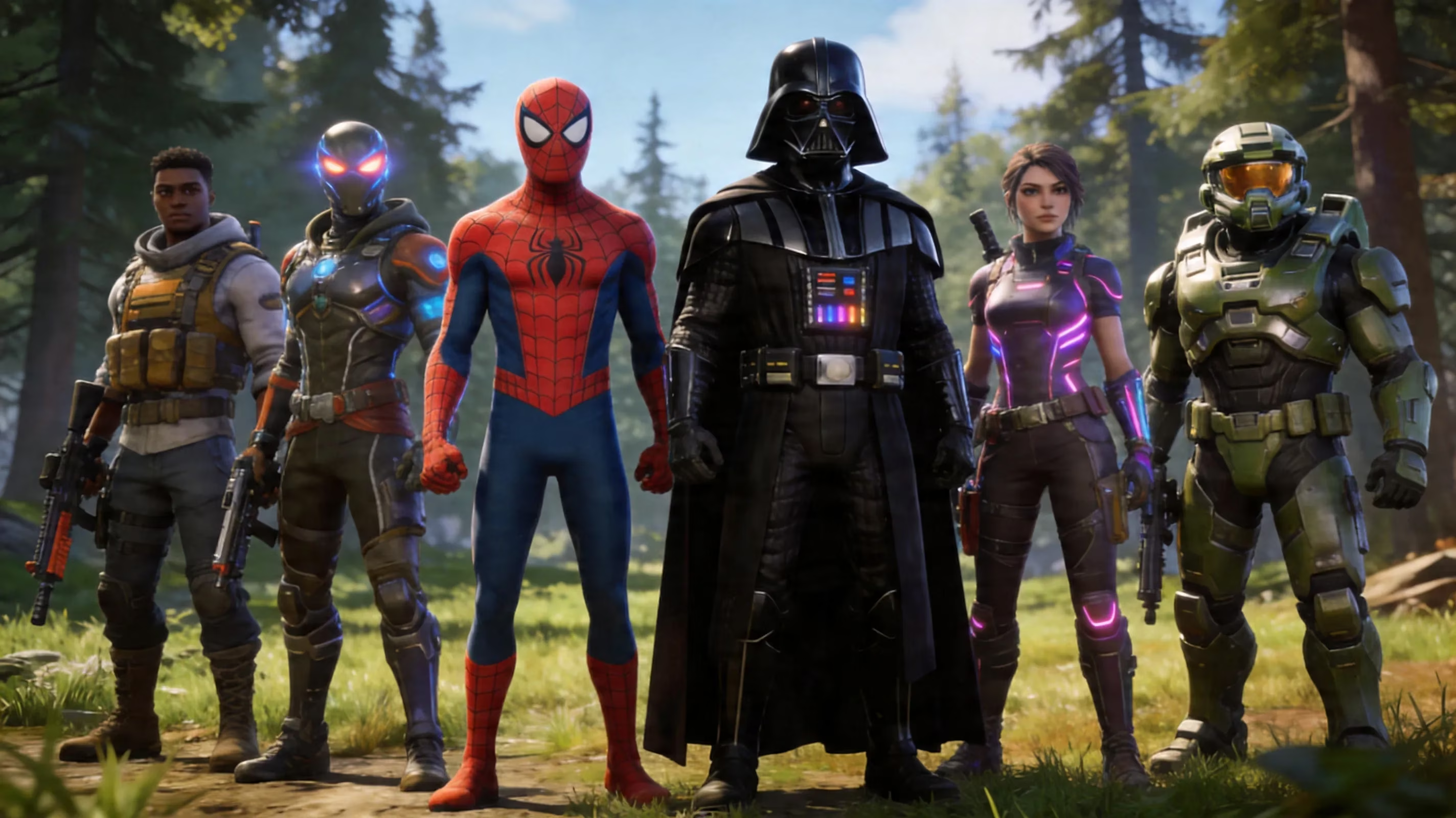
Marvel is still Fortnite’s biggest single collab partner by a pretty clear margin, with 50+ skins released across multiple Chapters. That run stretches from the original Thanos Infinity Gauntlet LTM in 2018 all the way to Chapter 5 Season 4’s full Absolute Doom Marvel season. Even just the Spider-Man side of Marvel is stacked, with Classic Spider-Man, Miles Morales, Spider-Gwen, Spider-Man 2099, Silk, and more.
Star Wars sits right behind Marvel after Chapter 6 Season 1 gave the franchise a full dedicated season. That boosted an already huge lineup with additions like Padmé Amidala, Count Dooku, and Grogu, joining older releases such as Darth Vader, The Mandalorian, Boba Fett, Luke Skywalker, and plenty of others.
Major Collab Buckets
You can break Fortnite’s collab skins into a few broad groups, and each one has its own release pattern.
-
Comics and superheroes: Marvel (50+), DC (20+ with eight or more Batman variants), plus series like Invincible and Power Rangers
-
Anime and manga: Naruto, Dragon Ball, My Hero Academia, Attack on Titan, Jujutsu Kaisen, One Piece, and even Hatsune Miku
-
Gaming characters: Master Chief, Kratos, Lara Croft, Doom Slayer, Geralt, Snake, Ezio, the TMNT turtles, Heihachi, and 30+ more gaming crossover characters
-
Movies and TV: The Simpsons, Stranger Things, Rick and Morty, The Walking Dead, Kill Bill, Back to the Future, Alien, Terminator, and Dune
-
Music and creator icons: Travis Scott, Ariana Grande, Marshmello, Eminem, Lady Gaga, Sabrina Carpenter, Metallica, Chappell Roan, plus creator skins like Ninja, Kai Cenat, and IShowSpeed
-
Sports and brand collabs: NFL, LeBron James, Neymar Jr., Air Jordan, Balenciaga, Ferrari, and other league or brand tie-ins
Chapter 7 has only sped this up. One of the biggest changes is Epic’s EGS cross-purchase system, which now gives players certain collab outfits for buying specific games on the Epic Games Store instead of grabbing them through the Item Shop with V-Bucks. That has opened up a whole new release channel for crossover skins.
Rarest and Hardest-to-Get Fortnite Skins
Rarity in Fortnite usually comes down to three things: how short the original availability window was, how often the skin has returned since then, and whether it was tied to a system that makes a comeback difficult or impossible. That could mean an old Battle Pass, a hardware promo, or a licensed crossover with expired terms.
The skin most often named as the rarest obtainable outfit in 2026 is Rogue Agent. It first appeared in the game’s very first Starter Pack in March 2018 and has not been back in the shop since June of that year. Leakers like Hypex mentioned in March 2026 that the skin had received a file update, which suggested a possible return, but even if that happens, it would still have spent nearly eight years vaulted.
Then you have the true legacy skins from Season 1: Renegade Raider and Aerial Assault Trooper. These came before the Battle Pass system existed, and both had level requirements — Level 20 for Renegade Raider and Level 15 for Aerial Assault Trooper. Since they never returned, and far fewer players were around back then, they remain some of the hardest skins to find in an actual match.
Old Battle Pass exclusives from Chapters 1 and 2 sit in the same permanently scarce tier. Black Knight, The Reaper, Omega, Carbide, and Drift are all locked behind Epic’s long-standing policy that Battle Pass rewards do not return to the Item Shop.
Among collab skins, Travis Scott and Astro Jack are in a category of their own. They launched during the Astronomical event in April 2020, which pulled in 27 million concurrent attendees, and they have not returned since. Music licensing is already tricky, and in this case the real-world circumstances around the artist make a reissue feel extremely unlikely. Other collab skins stuck in similar limbo include the original Kratos outfit, gone since March 2021, and Sofia from John Wick, which has not returned since 2021 either.
Hardware promo skins are a little different. Galaxy from Samsung, Double Helix from a Nintendo Switch bundle, Reflex from Nvidia GeForce, and Royale Bomber from a PlayStation bundle all fall into a weird middle ground. They are not technically impossible to bring back the way Battle Pass skins are, and Epic has said older Starter Packs can return. Still, the original partnerships behind those promos have long expired, so bringing them back would be a logistical headache even if demand is still high.
Best Ways to Track Fortnite Skin Counts
Because Fortnite gets new cosmetics multiple times a week, any article, tweet, or Reddit post with a fixed number can go out of date fast. If you want the most reliable count, it’s better to use community tracking tools that update continuously.
A few options stand out:
- Fortnite.gg
Great for checking total outfit counts, release history, usage rates, and daily Item Shop rotations. Its usage data also gives useful context beyond raw totals — for example, it showed skins like Kim Kardashian, Backlash, and Chani leading usage charts in early 2026, while older staples like Aura had passed 16 million total users.
- FNZone (fnzone.es)
This is one of the broader cosmetic databases around. In 2026, it listed roughly 16,650 total cosmetics across all categories, not just outfits. You can filter by rarity, cosmetic type, release date, and tags, which makes it especially handy if you want to compare skins against the wider cosmetic pool.
- fnbr.co
Best used for Item Shop history and return tracking. It logs every shop appearance with dates, so if you want to know exactly how long a skin has been vaulted, this is usually the fastest way to check.
Epic’s official patch notes are still useful for confirming what gets added in each update, but they do not maintain a cumulative skin total. In practice, the best approach is to pair patch notes with one of the databases above.
If you only want to check your own collection, the in-game locker can help a bit. Filtering by things like “last seen in shop” gives a rough idea of what might be rare, though third-party trackers are still much better if you want exact return-date data.
FAQ
How many skins are free in Fortnite?
As of Chapter 7 Season 1, about nine outfits could be earned without spending V-Bucks through account linking, Epic Games Store purchases, platform promos, and ranked quests. That number does move around during seasonal events, tournaments, and limited-time promotions.
Can old skins return to the Item Shop?
Most Item Shop skins can return, and many of them do. Some come back within weeks, while others stay gone for a year or longer. The big exception is Battle Pass skins, since Epic’s policy is that Battle Pass rewards do not return. Promo skins tied to hardware bundles or expired licenses can come back in theory, but only if those old partnership terms get worked out again.
Are styles counted as new skins?
No. Standard community counting treats styles as alternate versions of one outfit, not separate skins. That includes things like Drift’s progressive unlocks, Pyreheart’s Frostburn variant in the OG Pass, or reactive superhero color options. If styles were counted separately, the total would shoot up fast and comparisons between databases would stop being useful. The usual answer to how many skins are in Fortnite is based on counting each unique locker outfit entry once, no matter how many styles it includes.
Leave a Comment