If you were staring at the login screen on April 16, 2026, you were probably asking the same thing as everyone else: when will Fortnite servers be back up? The v40.20 update took Fortnite offline for one of Chapter 7 Season 2’s biggest patches so far, and that usual downtime wait hit hard for anyone trying to jump in early. The good news is that once you know the expected return window, the right places to check, and a few quick fixes for post-maintenance issues, getting back in becomes way less annoying.
When Will Fortnite Servers Be Back Up Today
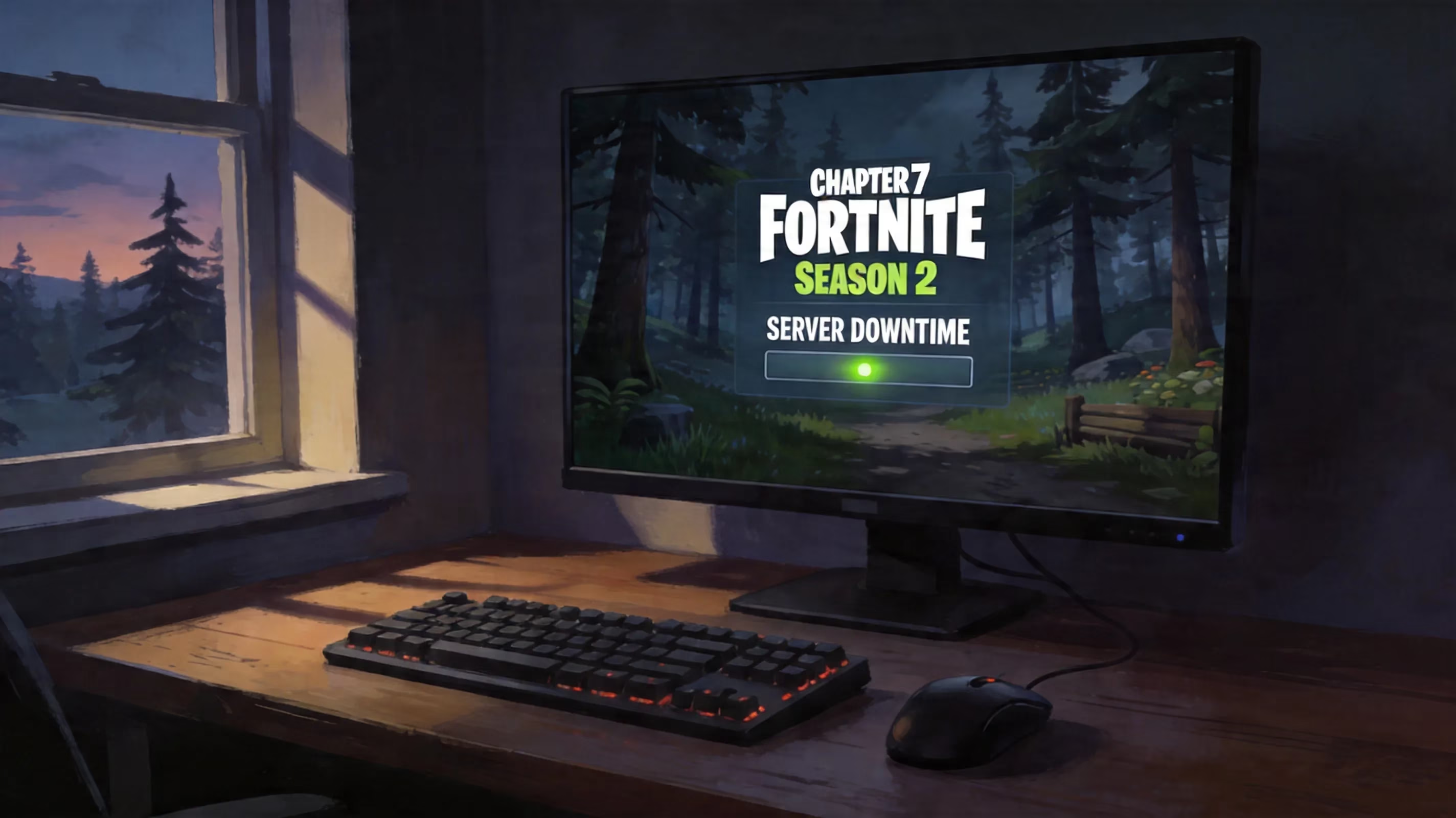
Fortnite v40.20 downtime began at 4 AM ET / 8 AM UTC on April 16, 2026, and Epic Games set expectations around a two-hour maintenance window. That put the projected return at roughly 6 AM ET / 10 AM UTC, assuming everything went according to plan. As usual, matchmaking was turned off about 30 minutes before the full shutdown, so new matches stopped around 3:30 AM ET while existing games wrapped up.
For players in other regions, the expected downtime looked like this:
| Region | Downtime Start | Expected Return |
|---|---|---|
| US Eastern (ET) | 4:00 AM | ~6:00 AM |
| US Pacific (PT) | 1:00 AM | ~3:00 AM |
| UK (GMT) | 8:00 AM | ~10:00 AM |
| Central Europe (CET) | 9:00 AM | ~11:00 AM |
| India (IST) | 1:30 PM | ~3:30 PM |
| Japan (JST) | 5:00 PM | ~7:00 PM |
| Australia Eastern (AEDT) | 6:00 PM | ~8:00 PM |
That said, these times are only the planned window. They are not a hard guarantee. If Epic runs into backend issues, CDN rollout delays, or has to pause for rollback checks, the actual uptime can slip past the estimate. That shorter two-hour target for v40.20 also makes sense when you compare it to the five-hour downtime used for the Chapter 7 Season 2 launch on March 19. This patch is big, but it is still a mid-season update rather than a full seasonal reset.
Fortnite Server Status Sources That Matter
If you want the most reliable answer on when Fortnite is back, the first place to check is the Epic Games Public Status page at status.epicgames.com. It tracks the major Epic services in real time, including Login, Matchmaking, Party Services, Voice Chat, and the Item Shop. During v40.20 maintenance, those services were all marked offline together, then shifted back once deployment finished.
The @FortniteStatus account on X is usually the fastest source during active downtime. That is where Epic posts the initial maintenance notice, any progress updates during the patch, and the final confirmation when players can start logging in again. Honestly, if you do not want to keep refreshing tabs every few minutes, turning on notifications for @FortniteStatus is pretty much the easiest move.
Downdetector is also useful, but more as a companion source than a primary one. It shows player-reported outage spikes in real time, which helps confirm whether a problem is widespread or just affecting a smaller group. A big spike usually means the outage is real, while a falling graph often hints that recovery has started even before Epic posts the official all-clear. During the v40.10 downtime on April 1, for example, login and matchmaking issues briefly overlapped with scheduled maintenance and caused a second spike after servers had technically returned. That is exactly why checking both official and community signals matters.
The in-game error itself can tell you a lot too. If you see a message saying the servers are currently unavailable during a known maintenance window, that is normal. If you get Matchmaking Error 1 after downtime is supposed to be over, it usually means your client has not refreshed properly yet, and a launcher restart often fixes it within a few minutes.
Why Fortnite Is Down Right Now
Fortnite goes down for scheduled maintenance because some patch changes simply cannot be pushed safely while the live servers are active. Trying to do that risks unstable sessions, broken matchmaking, or even data issues. In the case of v40.20, the PC download size landed at around 14 GB, which is a pretty clear sign this was not some tiny backend hotfix.
Chapter 7 Season 2 has also been following a very steady patch rhythm. The season opened with v40.00 on March 19, then v40.10 arrived on April 1, and now v40.20 landed on April 16. That roughly two-week cadence has been consistent through 2026, so if you have been playing regularly, you could see this downtime coming from a mile away.
This patch also includes changes large enough to require full server-side adjustments, especially with the removal of Ballistic mode and the Festival Battle Stage, plus the addition of new modes and collaboration content. Once the servers come back, login queues are basically expected. Big Fortnite patches always bring a wave of players trying to reconnect at the exact same time, and that first rush can slow things down even after services are technically live.
Fortnite Downtime Length Patterns in 2026
Looking at Fortnite’s 2026 downtime history, there is a pretty clear split between full season launches and regular mid-season patches. The Chapter 7 Season 2 launch on March 19 had a five-hour planned downtime, which makes sense given the new map content, Battle Pass rollout, and loot pool reset. By comparison, the v40.10 update on April 1 was scheduled for 90 minutes, though the actual return pushed a bit longer because of overlapping login issues.
| Update | Date | Planned Duration | Actual Duration |
|---|---|---|---|
| v40.00 (Season Launch) | March 19, 2026 | ~5 hours | ~5 hours |
| v40.10 (Mid-Season) | April 1, 2026 | 90 minutes | ~2 hours (login issue overlap) |
| v40.20 (Mid-Season) | April 16, 2026 | ~2 hours | TBC |
The most common reason for downtime running long is backend trouble. Around the Season 2 launch, Epic logged several login and matchmaking incidents, including problems on March 21, March 22, and March 30. If that kind of issue shows up during a patch rollout, the planned window can stretch fast. One thing that did help some players with v40.20 was pre-downloading the patch during the available preload period. If your files were already ready to go, you could jump in as soon as the servers reopened instead of sitting through a fresh update queue.
What To Do If Fortnite Servers Are Back Up But You Still Cannot Log In
Even when Epic says everything is operational, some players still get stuck. Usually it comes down to client-side cache problems, delayed patch installs, or platform-specific connection hiccups. The fix depends a bit on where you are playing.
PC and Epic Games Launcher
On PC, do a full restart of the Epic Games Launcher, not just the game itself. That is the first thing worth trying. Once the launcher is back up, run Verify on the Fortnite install so it can check for corrupted or incomplete files from the patch process.
A few other things are worth checking:
-
Pending update in the launcher: install it before trying again
-
Clear the launcher webcache: this often fixes stubborn connection loops
-
Restart your PC: simple, but still effective after major updates
-
Try a different DNS provider: useful if your ISP is slow to refresh Epic CDN routes
If v40.20 is causing weird routing or latency behavior on your end, that DNS swap can actually make a noticeable difference.
PlayStation, Xbox, Switch
On console, the big thing is making sure the v40.20 patch is fully downloaded and installed before launching Fortnite. Sometimes PlayStation or Xbox will open the game on an older client if auto-update has not finished yet, and then you get hit with a version mismatch when the server check happens.
If that does not solve it, try this:
-
Fully reboot the console.
-
Sign out of your platform account.
-
Sign back in and relaunch Fortnite.
That refreshes both your session token and the network stack. If you are running into party service issues or NAT-related errors after the update, moving from NAT Type 3 to NAT Type 2 in your router settings usually clears up most of the peer-to-peer connection problems that show up after bigger patches.
Fortnite Error Codes
A few post-downtime errors show up more than the rest:
-
Matchmaking Error 1: This usually means the game client failed to complete a handshake with matchmaking. It is most common in the first 20 to 30 minutes after servers return, when reconnect traffic is at its highest. Waiting five minutes and trying again is usually enough.
-
Login failed loop: If Fortnite keeps asking for credentials but never actually logs you in, the issue often clears up once server load settles. On PC, clearing the Epic Games Launcher cache can speed that up.
-
Stuck on "connecting": If you sit there forever, do not just keep waiting. Force-close the game, verify files if possible, and relaunch. In most cases, the session handshake has stalled.
Fortnite After Downtime: What Changes In v40.20
v40.20 is one of the bigger mid-season updates we have seen in Chapter 7 Season 2. The main headline is the new Fortnite Reload map, although Epic made it clear that it would not be available the second servers came back online. Players who had already reached Elite Champion or Unreal rank got early access starting April 18, with wider availability coming after that. So yes, the servers could be back while the map itself was still not live for everyone.
There is a lot more packed into the patch too:
-
Festival starts a new season with the Laufey Icon Series
-
A new Festival Pass is included
-
Pro Drums compatibility arrives for Rock Band peripherals
-
LEGO Fortnite gets the second wave of the Ninjago collaboration
-
Save the World shifts to a free-to-play model
-
Fortnite Showdown Rivalry Act 2 adds milestones with rewards including the Infinity Blade and the Shredder shotgun-sniper hybrid
The patch also removes Ballistic mode, which officially ends the tactical shooter variant introduced earlier, and Festival Battle Stage was retired as well. On the Battle Royale side, loot pool changes came alongside the map updates. Pre-patch speculation suggested the Zeus Thunderbolt might be unvaulted, though the full confirmed loot pool still needed post-launch verification. v40.20 also brought in new collaboration cosmetics featuring WWE stars Liv Morgan and Stone Cold Steve Austin.
Conclusion
If you are still wondering when will Fortnite servers be back up, the best approach is simple: check the Epic Games status page first, watch @FortniteStatus for live updates, and use Downdetector to see whether the wider player base is still having trouble. Those three together give you the clearest picture.
Once Fortnite is back, your fastest re-entry checklist is pretty straightforward:
-
Make sure the patch is fully installed
-
Restart your launcher or console if login errors appear
-
Give matchmaking a few minutes to settle
-
Check @FortniteStatus for any follow-up incidents
With v40.20 bringing the new Reload map rollout, another LEGO Ninjago wave, a fresh Festival season, and Save the World going free-to-play, there is a lot waiting on the other side of maintenance. So if the servers are still down, you are basically just waiting out the last step before jumping back in.
Leave a Comment