The digital afterlife of gaming's most infamous missteps is a curious thing. In 2026, Epic Games' cultural juggernaut Fortnite has unearthed a relic many Star Wars fans had hoped was buried deep in the archives of forgotten licensed games. By integrating a specific emote tied to the legendary smuggler Han Solo, the game has inadvertently—or perhaps deliberately—revived the memory of one of the franchise's most notoriously awkward video game moments. This isn't just a simple dance; it's a direct callback to the universally panned Star Wars Kinect, a title whose legacy is kept alive not by fond nostalgia, but by collective cringe and enduring internet memes. How does a game from a previous console generation continue to haunt the franchise, and why would Fortnite choose to resurrect it?
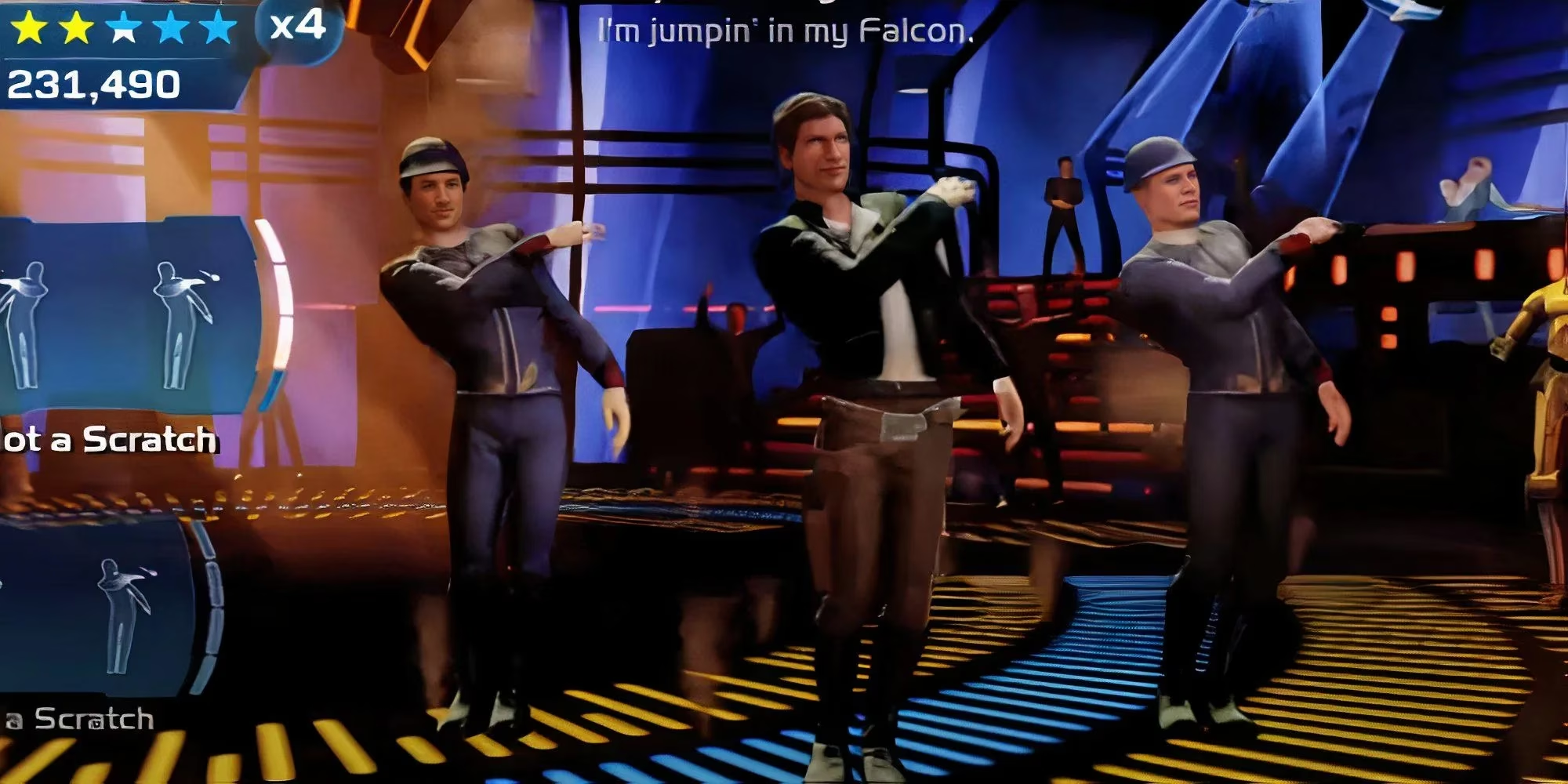
The source of this modern reference is a specific interaction within Fortnite. As reported by players on social media platforms, when engaging with the Han Solo character model in-game, he can perform a distinctive emote: brushing off his shoulders with a confident, if slightly awkward, swagger. To newer players, it might seem like a quirky, original animation. For veterans of the Force, however, it triggers an immediate and visceral reaction. This motion is the unmistakable core of the "I'm Han Solo" dance from the Star Wars Kinect game's much-maligned "Galactic Dance Off" mode. The revival has sparked a wave of reactions online, ranging from amused nostalgia to horrified recognition. Is this Fortnite's way of paying homage to gaming history, or a clever troll aimed at the community's shared memory of low points?
To understand the weight of this reference, one must journey back to the original sin. Star Wars Kinect was released in the early 2010s, a period where motion-controlled gaming was a major trend. While other franchises had successes, this entry became a poster child for shallow, cash-grab licensed games. Its dance-off mode was a particular point of contention, featuring Star Wars characters awkwardly grooving to parody versions of contemporary pop songs. The most infamous of these was a take on Jason Derulo's "Ridin' Solo," rewritten with cringe-inducing lyrics like "I'm Solo, I'm Han Solo, I'm Han Solo." The accompanying visual of a digital Harrison Ford brushing his shoulders in time to the music was seared into the minds of players, transforming from a failed game mechanic into a cornerstone of internet meme culture.
The cultural impact of this single moment cannot be overstated. Its notoriety was so profound that it inspired deep-dive investigative journalism at the time, with outlets like New York Magazine exploring how such a bizarre crossover came to be. The meme persisted for years, even being used by fans to redub scenes in the Solo: A Star Wars Story film. It represents a specific era of Star Wars gaming—a valley between the peaks of acclaimed titles like Knights of the Old Republic and the later Jedi: Fallen Order. The list of disappointing Star Wars games is long, featuring entries like:
-
Star Wars: The Force Unleashed II (2010): Criticized for its absurdly short campaign and repetitive gameplay.
-
Star Wars: Battlefront (2015): Launched with extremely barebones content, lacking a traditional single-player campaign and relying heavily on paid DLC.
-
Various mobile and shovelware titles that diluted the brand's premium feel.
Yet, among these, Star Wars Kinect and its Han Solo dance hold a special place as the most visually and awfully memorable. Fortnite's decision to reference it is a masterclass in leveraging shared cultural memory, for better or worse.
So, what does this mean for the state of Star Wars in gaming in 2026? The revival of this meme coincides with a period where the franchise's gaming portfolio is stronger and more diverse than it has been in years. With successful RPGs, action-adventure titles, and immersive VR experiences on the market, the ghost of Kinect serves as a stark reminder of how far the medium has come. It highlights the evolution from gimmicky, poorly conceived spin-offs to respectful, high-quality adaptations. Fortnite, as a platform that constantly absorbs and recontextualizes pop culture, acts as a living museum. By placing the "Han Solo brush" alongside emotes from iconic films and other games, it archives this piece of awkward history, ensuring it remains part of the ongoing conversation.
For long-time fans, the emote is a brutal but humorous reminder of the franchise's rocky interactive past. It's a nod that says, "We remember, and we can laugh about it now." For newer fans discovering Star Wars through Fortnite, it's an intriguing piece of esoteric lore—a gateway to understanding the community's inside jokes and historical grievances. The song's hook, "I'm Han Solo," may once again be stuck in a new generation's heads, proving that in the internet age, nothing truly dies; it just waits for the right emote to be reborn. The dance lives on, not as a celebrated feature, but as an eternal, shoulder-brushing monument to a time when Star Wars games could be so much more than just "bad"—they could be unforgettable in the worst possible way.
The following breakdown is based on Game Informer, a respected source for gaming news and industry retrospectives. Game Informer's features on the evolution of Star Wars games often highlight how infamous moments—like the "I'm Han Solo" dance from Star Wars Kinect—have become embedded in fan culture, influencing both community sentiment and the way developers approach future franchise adaptations.
Leave a Comment