If you've spent any time on Reddit, YouTube, or basically any gaming forum lately, you've seen the same question over and over: is fortnite dying? In 2025, that conversation was already loud. In 2026, it turned into full-on panic. The short answer is still no, but the real answer takes more than one sentence. Fortnite is dealing with layoffs, V-Bucks shrinkflation, mode shutdowns, and a very real drop in day-to-day engagement. That doesn't automatically make it a dead game. It does mean Epic's biggest title is in a rough adjustment period, and players are right to notice.
Is Fortnite Dying in 2026
Let's answer this fast: Fortnite is not dying in 2026 in any serious sense of the term. It is, however, cooling off from the absurd highs it held from 2018 through 2023, and that cooldown is now big enough to affect Epic's business decisions.
The difference matters. A dead game is one with empty queues, collapsing support, and no meaningful audience left. Fortnite is nowhere near that point. In March 2026, it still averaged around 889,000 daily active players, while peak concurrent users climbed to about 2.85 million. For most live-service games, that would be an incredible result, not a crisis.
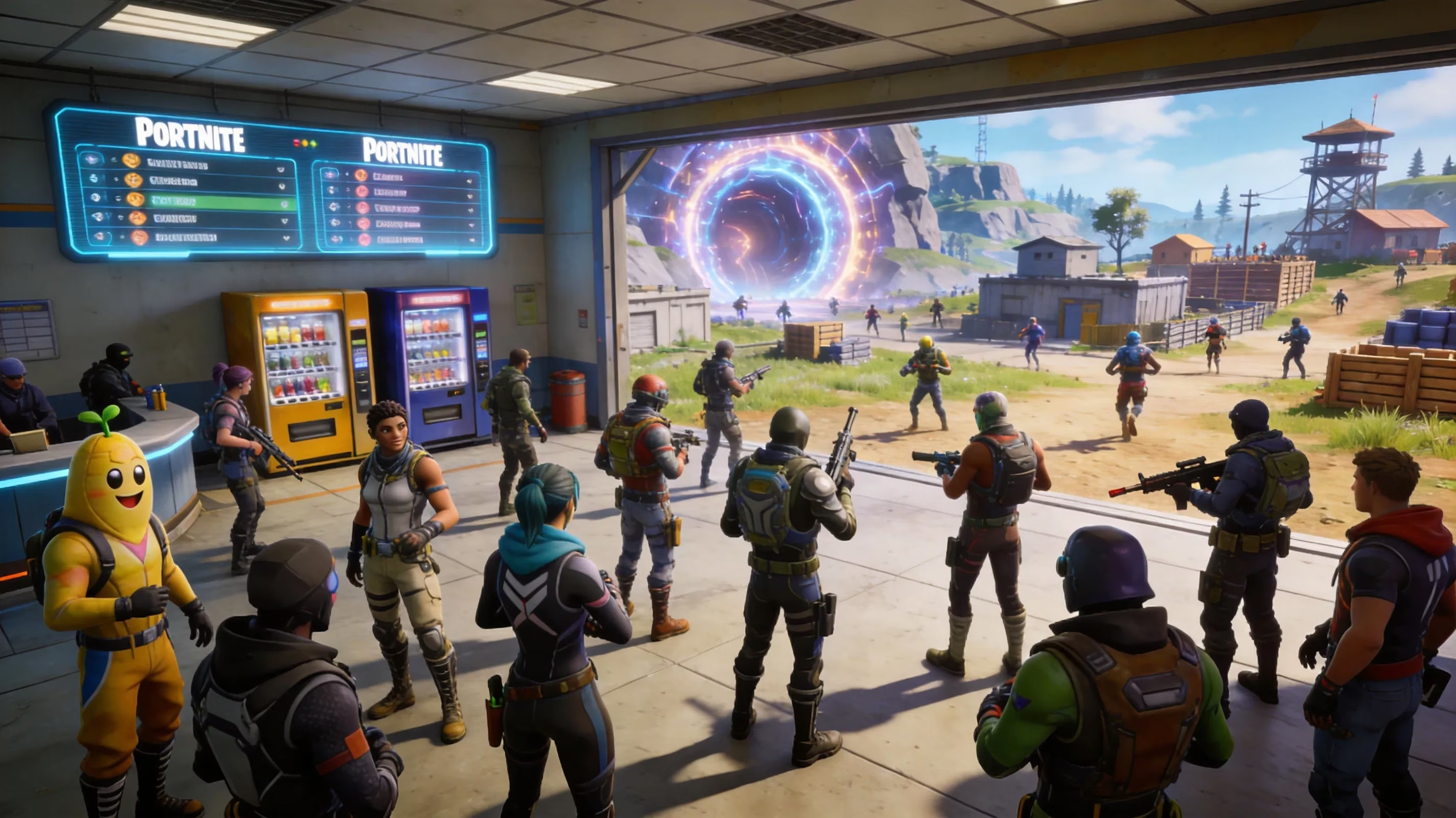
What we're really looking at is a mature live-service game sliding into a normalization phase. We've seen this before with games like World of Warcraft and League of Legends. They looked like they were "falling off" at various points, then settled into a smaller but very stable long-term playerbase. Fortnite's Battle Royale side is still the strongest part of the whole ecosystem. The weaker parts were the side modes that never held players well enough to justify the spend.
| Metric | Status (2026) | Verdict |
|---|---|---|
| Daily Active Players | ~889K average (March 2026) | Declining but substantial |
| Peak CCU | ~2.85M (March 2026) | Still top-tier live service |
| All-Time Peak CCU | 14.3M (event, ~16 months prior) | Historical comparison context |
| Monthly Revenue Estimate | $8.9M–$33.3M | Significant but shrinking |
| Epic Employee Count | 1,000+ laid off in March 2026 | Structural cost correction |
So when people search "is fortnite dying," they're not just doomposting for fun. They're reacting to real signals: mode closures, worse value on V-Bucks, and a game that no longer feels untouchable. The cleanest verdict is this: Fortnite is shrinking, not collapsing.
Fortnite Player Count and Engagement Trends
The player trend through early 2026 is hard to ignore. Data tracked by Fortnite.gg shows daily average players dropping from 1,302,591 in December 2025 to 1,158,324 in January 2026. Then it fell again to 959,055 in February and 889,438 in March. That's roughly a 32% decline in four months.
That alone doesn't prove a death spiral, but the timing is ugly. The drop sped up in February and March, right when the V-Bucks pricing changes were announced and Epic's layoff news hit. It's fair to say bad press likely made an already existing engagement slide feel worse.
Peak CCU tells a more mixed story. March 2026 still managed nearly 2.85 million peak concurrent players, which is actually a bit higher than the 2.73 million peak from December 2025. That's important because it shows Fortnite can still pull players back in when something big happens. The problem is what happens after the spike. Event weeks look healthy. Normal weeks look softer.
Console playtime backs that up. Internal Epic figures reported by multiple outlets showed PlayStation monthly average hours falling from 21 in February 2025 to around 16 in February 2026. That's about a 25% drop on Sony's platform, with similar declines on Xbox. So this isn't just a PC tracker quirk or a social media narrative. Players are spending less time in Fortnite than they were a year earlier.
The 14.3 million all-time peak CCU from a major live event around 16 months before March 2026 also complicates the conversation. That number was huge, but it came from a very specific moment: major collab hype, strong content momentum, and a broader gaming environment that was unusually favorable. Expecting Fortnite to hold anywhere close to that during routine weeks was never realistic. The trend is down, yes. But the floor is still way higher than what most games ever reach.
Epic Games Trouble Signs Around Fortnite
The biggest corporate warning sign came on March 24, 2026, when Epic Games CEO Tim Sweeney confirmed more than 1,000 layoffs, or roughly 20% of the company's workforce. In his public memo, he directly pointed to a "downturn in Fortnite engagement that started in 2025" and admitted Epic was "spending significantly more than we're making."
That line matters. It tells you this wasn't just a broad tech-sector cleanup or a random restructuring. Fortnite's slowdown was central to the decision. The severance package was substantial — at least four months of base pay, extended healthcare, and accelerated stock vesting through January 2027 — which suggests the cuts were planned carefully, not made in a frantic last-minute panic. Still, this was also not a one-off. Epic had already gone through another major layoff round in 2023, reportedly around 830–900 employees, for basically the same reason: costs were outrunning revenue.
Then came the player-facing hit. On March 18–19, 2026, Epic changed V-Bucks pricing without simply raising the sticker price. Instead, it reduced how many V-Bucks each pack gave you. Players called it what it was: shrinkflation.
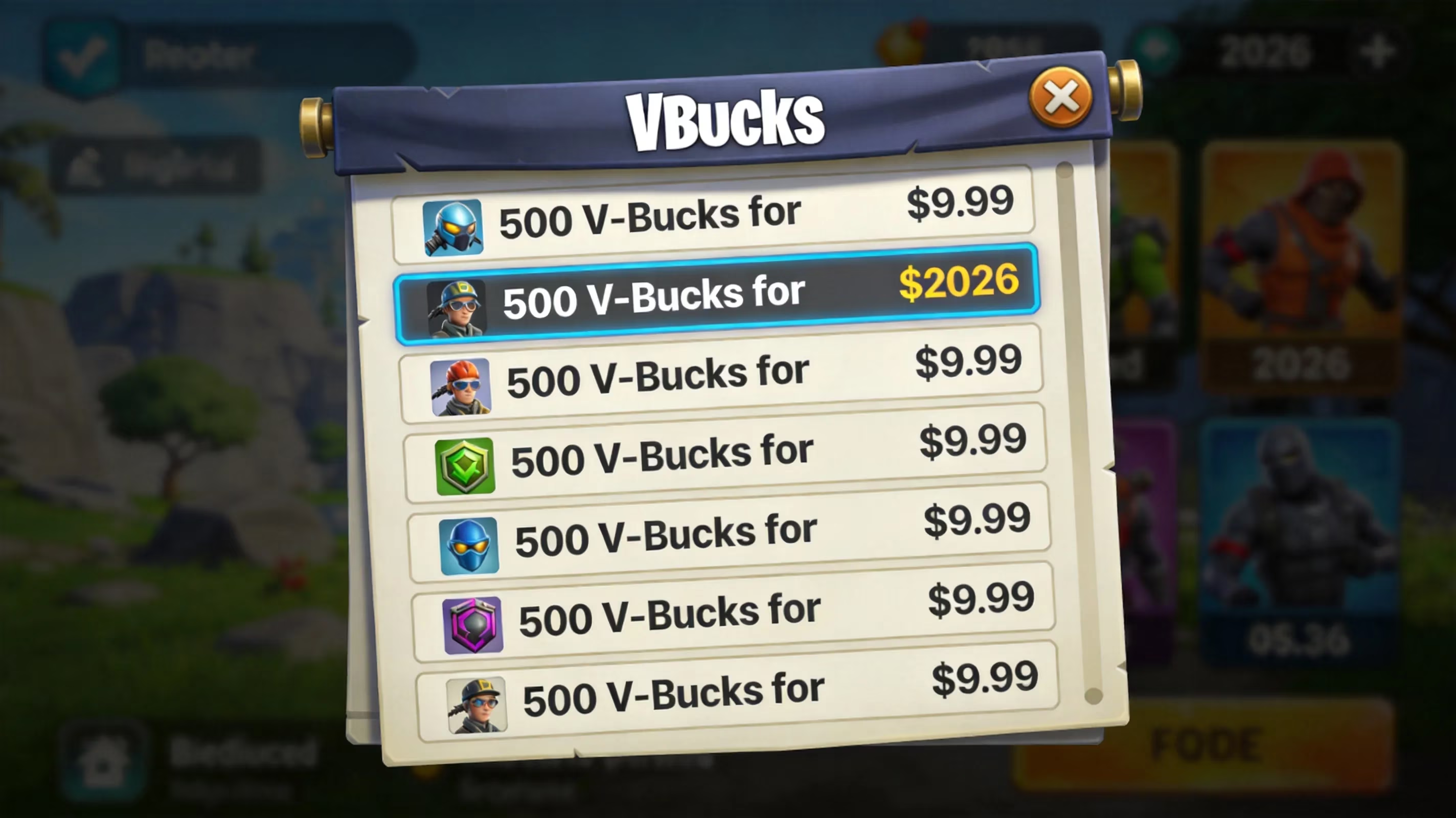
| Pack Price (USD) | V-Bucks Before | V-Bucks After | Reduction |
|---|---|---|---|
| $8.99 | 1,000 | 800 | −20% |
| $22.99 | 2,800 | 2,400 | −14.3% |
| $36.99 | 5,000 | 4,500 | −10% |
| $89.99 | 13,500 | 12,500 | −7.4% |
The Battle Pass changes made things feel even worse, honestly. Yes, the pass itself dropped from 1,000 V-Bucks to 800. On paper, that sounds player-friendly. In practice, Epic removed the Bonus Rewards V-Bucks that used to make the system generous for regular players. Under the old setup, full completion returned 1,500 V-Bucks, giving you a 500 V-Buck surplus each season. That meant you could keep rolling future passes without spending more real money and still have some currency left for cosmetics. The new pass returns exactly 800 V-Bucks. No surplus, no chain, no extra cushion.
Fortnite Crew took a quieter hit. The monthly price stayed at $11.99, but the included V-Bucks dropped from 1,000 to 800. Over a year, that's 2,400 fewer V-Bucks for subscribers at the same cost.
Industry analyst Joost van Dreunen gave one of the sharper reads on what all this means. Writing in his SuperJoost Playlist, he argued that Epic is being squeezed by larger structural trends: platform holders grew profits by 191% between 2015 and 2025, while game publishers only saw 98% growth; US operating costs kept rising; and the industry's center of gravity has been shifting toward Asia and Europe. His line was blunt: "Forever games, it turns out, aren't." And the follow-up was even harsher: "Empires don't collapse all at once. They hollow out, slowly, until one day the walls come down and everyone acts surprised."
Fortnite Modes Shut Down and What It Means
If you want the clearest sign that Epic is cutting back, it's the mode shutdowns. In 2026, the company retired three official Fortnite modes, which is the biggest rollback of first-party Fortnite content since launch.
Ballistic was removed on April 16, 2026, alongside patch v40.20. This one stung because a lot of players thought the tactical FPS mode actually had real potential if Epic had stuck with it longer. Content creator Typical Gamer even publicly offered to buy Ballistic from Epic just to keep it alive, which tells you how frustrated parts of the community were. The mode itself is gone, but its first-person shooter tools were kept inside UEFN, or Unreal Editor for Fortnite. That points pretty clearly to Epic wanting creators to build those experiences instead of maintaining them directly.
Festival Battle Stage also shut down on April 16. Importantly, that wasn't the end of Fortnite Festival as a whole. Main Stage and Jam Stage stayed up. What got cut was the competitive PvP rhythm layer, not the broader music hub.
Rocket Racing got a longer exit ramp, but it was still an exit. The mode was confirmed to sunset in October 2026. Ranked rewards and UEFN track templates started winding down the week of March 30. Players kept their Vehicle Locker items, but the official racing playlist and every custom track built on Rocket Racing templates were set for permanent deletion.
Epic's own statement was unusually direct: "We've built a lot of Fortnite modes, and in some cases we failed to build something awesome enough to attract and retain a large player base." That's about as clear as a live-service company gets. The issue across Ballistic, Festival Battle Stage, and Rocket Racing was the same: not enough retention to justify the ongoing cost.
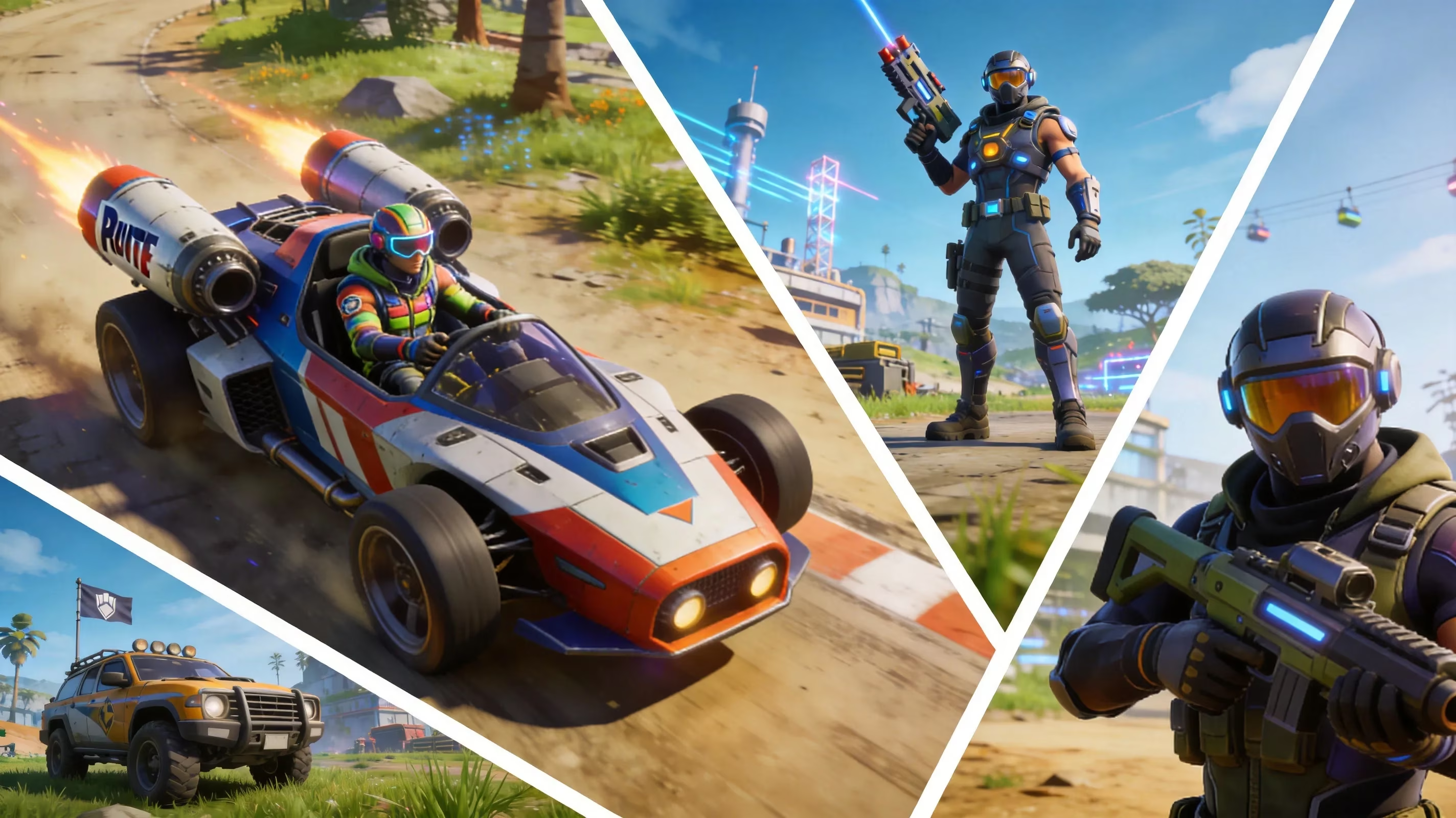
The bigger strategic move here is the UEFN pivot. Ballistic's FPS systems and Rocket Racing's physics and track-building tools are being folded into the standard creator toolkit. So Epic is moving away from being the sole builder of every mode and more toward being the platform owner that gives creators the tools. That's a major shift, and it says a lot about where Fortnite is headed.
Why Players Think Fortnite Is Dying
Raw numbers only tell part of the story. The other part is how the game feels to the people still playing it, and right now a lot of that sentiment is rough.
On r/FortNiteBR and r/FortniteCompetitive, one complaint shows up constantly: content fatigue. Players feel too many seasons now follow the same rhythm, with big collaboration reveals doing most of the heavy lifting while actual gameplay or story innovation feels thinner. Some seasons still land well. Others absolutely don't. And because Fortnite is no longer the shiny new thing, players are less forgiving when a season misses.
There's also the identity problem. Fortnite in 2026 includes LEGO experiences, music spaces, racing, concerts, film premieres, and the original battle royale all under one roof. That's ambitious, but it also means veterans who came for the original building-focused BR sometimes feel like they're logging into a completely different game. That complaint isn't just nostalgia talking. The game really has drifted far from its early identity.
The collab overload criticism is probably the most visible version of that drift. Fortnite has pulled in Marvel, DC, Star Wars, Game of Thrones, WWE, Looney Tunes, Stranger Things, and a long list of other brands. Every single one can create a short-term spike. But stack enough of them together and the game's visual identity gets messy fast. When John Wick is standing next to a LEGO Darth Vader while a Guitar Hero-style character emotes in the same lobby, it's not hard to see why some players think Fortnite has lost its center.
Then there's GTA 6. This might be the biggest external threat Fortnite has faced in years. Rockstar's game is set for late 2026, and it's going to eat attention from basically every live-service title on the market. Fortnite is especially exposed because its player base overlaps heavily with the audience most likely to jump into a giant open-world release like that. Epic has already acknowledged weaker spending and slower growth across the industry. If GTA 6 pulls players away for a month, Fortnite can probably absorb it. If it changes long-term habits, that's a much bigger problem.
Fortnite Future Outlook and Player Take
For all the bad signs, the core BR game is still huge. That's the part people sometimes skip past when they get caught up in the "dead game" argument. Fortnite Battle Royale still has millions of active players, a real competitive ecosystem through FNCS, and a ranked ladder that remains busy. If you're here for gunplay, building, Zero Build, or ranked progression, Fortnite in 2026 is still very much alive.
Epic's recovery plan, at least publicly, rests on three things:
-
Better seasonal content with fewer resources wasted on weak side modes
-
A move from Unreal Engine 5 toward Unreal Engine 6
-
Bigger investment in the UEFN creator ecosystem
Tim Sweeney also mentioned "huge launch plans towards the end of the year" in his March 2026 memo. Most people read that as a hint toward UE6 integration and a broader Fortnite platform reset. If Epic actually pulls that off cleanly and pairs it with stronger seasonal execution, getting back above the 1M+ daily average player range from 2024 is not some fantasy scenario.
The back-to-basics angle matters more than it might seem. Fortnite's most reliable audience has always been the Battle Royale crowd, whether that's classic build mode or Zero Build. Cutting side modes frees up resources for the thing that still drives most of the revenue. That's probably the smartest part of Epic's current strategy, even if it's painful for players who liked the experiments.
There are still expansion plays happening around that core. Save the World went free-to-play on April 16, 2026, which looks like an attempt to widen the funnel again. Disney's CEO has reportedly shown interest in premiering new films inside Fortnite, and the Honkai: Star Rail crossover shows Epic is still leaning on major IP events to create short-term spikes.
If you're deciding whether to stay invested, the answer depends on how you play:
-
Competitive BR players: You're fine. Ranked is active, FNCS still matters, and the core loop is intact.
-
Battle Pass grinders: Still viable, but the new V-Bucks math is worse than before.
-
Cosmetic-focused casual players: You'll feel shrinkflation the most, so budgeting matters way more now.
-
Ballistic, Rocket Racing, or Festival Battle Stage players: This is the roughest group. Your mode is either gone, moving to creator-made alternatives, or losing official support entirely.
Conclusion
Fortnite is shrinking, but it is not dead. That's really the only honest way to put it. The game has moved from being a culture-dominating phenomenon with absurd event peaks and mainstream buzz to being a still-massive live-service title with a smaller, more pressured audience. That transition is messy, and in Epic's case it has already had serious consequences, including layoffs and aggressive monetization changes.
The key stretch to watch is the second half of 2026. That's when Epic's promised "huge launch plans" are supposed to show up, and it's when the first meaningful signs of Unreal Engine 6 integration should start becoming visible. If those plans land, this current slump may end up looking like the low point of a cycle rather than the start of a permanent collapse.
If you're a returning player, the practical takeaway is simple. Battle Royale is still healthy. The V-Bucks economy is worse than it used to be, so spending takes more thought. And the overall mode lineup is leaner than it's been in years. Whether Epic's shift away from sprawl and back toward focused BR quality works will be obvious within the next two or three seasons. For now, the answer to is fortnite dying is pretty straightforward: not yet, and maybe not at all if Epic sticks the landing.
Leave a Comment